Mascots Do Not Have Terms of Office
Growing an existing face is harder than creating a new one. That is why it is worth more.
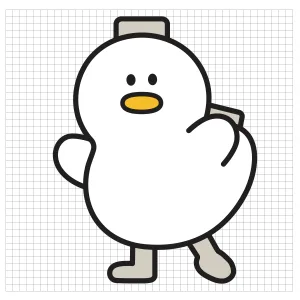
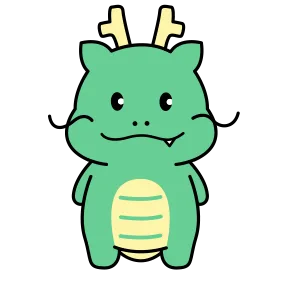
In summer 2026, mascot replacement made the news again. In Gimhae, a campaign pledge to revive Haedongi, the city's 2003 mascot, in place of Todeogi, which won the grand prize at the 2025 South Korea Local Government and Public Character Festival, drew a stream of complaints from residents. The city said it would consider using Haedongi as the main character and Todeogi as a secondary character. Goyang's Goyang Goyangi was dropped in early 2023 but returned in 2026, and a 50-second video announcing its comeback has been viewed more than 260,000 times.
One district mascot in Seoul was replaced by a different character just two years after it was introduced. Every replacement requires a new design, new merchandise and new costumes. If a mascot disappears just as residents learn its name, the familiarity built up over that time disappears with it.
There are opposite cases too. Yongin's Joayong started as a social media character in 2016 and stayed in use after the mayor changed. Revenue from collaborations and merchandise goes back to the local self-sufficiency center. A mascot used for a long time becomes a record of its region in itself.
This is not an argument against ever changing mascots. A mascot can be given new clothes to suit the times, or new friends. Seoul's Haechi got a new design in 2024, its first in 15 years. The point is that before making a change, we should first decide what to carry forward. Mascots do not have terms of office.


Sources
- 머니투데이 2026년 7월 31일mt.co.kr
- 쿠키뉴스 2026년 3월 12일kukinews.com
Daily Mascot Newsroom
See an error in this story? Request a correction
On the launch of Daily Mascot, we commit to recording, accurately, why mascots are created and how they are used.